by Ramesh Natarajan
on September 15, 2008
 Previously we discussed about how to install Apache and PHP from source. Installing LAMP stack from source will give you full control to configure different parameters.
Installing LAMP stack using yum is very easy and takes only minutes. This is a good option for beginners who don’t feel comfortable installing from source. Also, Installing LAMP stack using yum is a good choice, if you want to keep things simple and just use the default configuration.
[continue reading…]
by Ramesh Natarajan
on September 11, 2008
 Previously we discussed about how to use Nagios to monitor a Linux and Windows server. In this article, let us review how to monitor active sessions and temperature of VPN device using Nagios. You can monitor pretty much anything about a hardware using the nagios check_snmp plug-in.
[continue reading…]
by Ramesh Natarajan
on September 8, 2008
In the previous article, we discussed about Linux environment variables PS[1-4] and PROMPT_COMMAND. If used effectively, PS1 can provide valuable information right on the command prompt.
In Tomb Raider, Angelina Jolie has all the gadgets and weapons at her finger tips to solve the mystery in style. While the gadget and style of Angelina Jolie is hard to match, at least let us try to make the good old Linux prompt very functional and stylish using the 10 examples provided in this article.
[continue reading…]
by Ramesh Natarajan
on September 4, 2008
![PS[1-4] and PROMPT_COMMAND](https://static.thegeekstuff.com/wp-content/uploads/2008/09/ps1-4.jpg "PS[1-4] and PROMPT_COMMAND") Your interaction with Linux Bash shell will become very pleasant, if you use PS1, PS2, PS3, PS4, and PROMPT_COMMAND effectively. PS stands for prompt statement. This article will give you a jumpstart on the Linux command prompt environment variables using simple examples.
Your interaction with Linux Bash shell will become very pleasant, if you use PS1, PS2, PS3, PS4, and PROMPT_COMMAND effectively. PS stands for prompt statement. This article will give you a jumpstart on the Linux command prompt environment variables using simple examples.
[continue reading…]
by Ramesh Natarajan
on September 1, 2008
 MyISAM is the default storage engine for MySQL database. MyISAM table gets corrupted very easily. In this article, I’ll explain how to use myisamchk to identify and fix table corruption in MyISAM. When a table is created under MySQL, it creates three different files: *.frm file to store table format, *.MYD (MyData) file to store the data, and *.MYI (MyIndex) to store the index. I prefer to use InnoDB as the storage engine for bigger database, as it resembles Oracle and provides commit, rollback options.
[continue reading…]
by Ramesh Natarajan
on August 28, 2008
 This article is part of on-going Software For Geeks series. PuTTY is hands-down the best, free, and lightweight SSH client for Windows. I have provided list of 12 powerful PuTTY add-ons with screenshots, that will solve few shortcomings of the original PuTTY. Play around with these add-ons and choose the one that suites your need.
[continue reading…]
by Ramesh Natarajan
on August 25, 2008
 Oracle offers Linux distribution, that is based on Red Hat Linux. Should you use Oracle Linux Distro? I’ll provide appropriate information that will help you to answer this question. I have also provided screenshots of a Linux upgrade using Oracle Enterprise Linux.
[continue reading…]
by Ramesh Natarajan
on August 21, 2008
 After you have installed Apache2, if you want to use apachectl and httpd to it’s maximum potential, you should go beyond using start, stop and restart. The 9 practical examples provided in this article will help you to use apachectl and httpd very effectively.
[continue reading…]

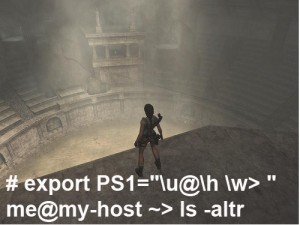 Photo courtesy of
 My name is Ramesh Natarajan. I will be posting instruction guides, how-to, troubleshooting tips and tricks on Linux, database, hardware, security and web. My focus is to write articles that will either teach you or help you resolve a problem. Read more about